Mastering Visual Communication with Infographic Chart Design Templates
You have a mountain of data. Sales figures, survey results, project timelines, or complex processes that need to be understood quickly. The challenge isn't just having the information; it's making it clear, engaging, and shareable. This is where a powerful Infographic Chart Design Templates Set becomes your most valuable asset, transforming dry statistics into compelling visual stories.
Beyond the Bar Graph: Real-World Applications
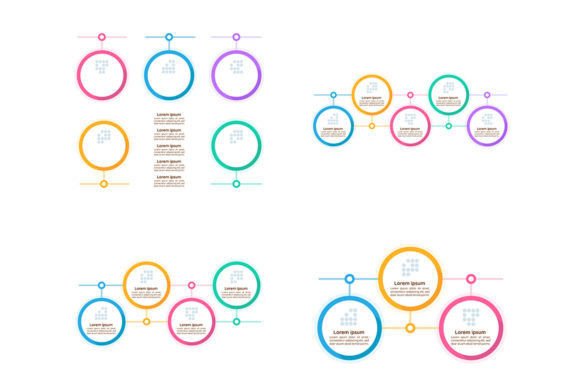
Think of these templates not as rigid charts, but as flexible frameworks for communication. A marketing manager can use a timeline template to map a product launch campaign, visually aligning team milestones with audience touchpoints. An HR professional might select a process infographic to illustrate the employee onboarding journey, making it feel welcoming and structured for new hires. Educators and trainers find step-sequence graphics invaluable for breaking down complex procedures into digestible, instructional steps that improve retention.
The strength lies in adaptability. A social institution or non-profit can use abstract vector info charts to present annual impact reports to donors, using blank copy spaces to highlight key achievements. A startup founder can craft a visually persuasive pitch deck slide that explains their business model or market opportunity in seconds. Even content creators on platforms like LinkedIn or Instagram leverage these ready-for-use infographic spreads to establish authority and drive engagement, turning a single data point into a conversation starter.
Tailoring the Template to Your Audience
The same core data can be presented in multiple ways depending on who needs to see it. For a board of directors, a clean, professional financial performance chart using a minimalist template conveys seriousness and clarity. For a consumer-facing social media campaign, that same financial data might be reworked using a more vibrant, icon-driven template to highlight growth in a way that feels accessible and optimistic.
Consider the difference between presenting to technical experts and general stakeholders. A software development team might use a detailed, multi-layered flowchart template to document a system architecture. For a client update, however, a simplified version using a step-sequence or timeline template would be more effective, focusing on deliverables and outcomes rather than intricate technicalities. The key is matching the visual complexity of your chosen Infographic Chart Design Templates Set to the knowledge level and interest of your viewer.
Practical Considerations Before You Dive In
Before selecting a template, start with your core message. What is the one thing you want your audience to remember? This will guide your choice between a comparison chart, a hierarchical diagram, or a geographic data map. Look for templates with blank copy spaces; these are not just empty areas but strategic zones where you can add context, callouts, or annotations that make the data personally relevant.
Product file formats are a crucial, often overlooked, consideration. A robust set should include:
- AI and EPS files for full vector editing in Adobe Illustrator, allowing you to customize every element, color, and line weight.
- SVG files for scalable web graphics that remain crisp on any screen resolution.
- PNG files with transparent backgrounds for easy drag-and-drop use in presentations and documents.
- JPEG files for quick sharing and compatibility across platforms.
This variety ensures you can use the templates across print materials, websites, social media, and video presentations without losing quality.
Navigating Strengths and Potential Pitfalls
The primary strength of a professional template set is the gift of time. It provides a polished starting point, ensuring your visuals look designed by a professional, which builds credibility. It also imposes a useful structure, helping you organize your thoughts logically. However, a potential pitfall is over-reliance. If every company in your industry uses the same popular template, your message can blend in. The solution is to use the template as a foundation, not a final product. Inject your brand's color palette, use custom icons, and most importantly, ensure the content itself is unique and insightful.
Another consideration is complexity. It can be tempting to choose the most elaborate, data-dense template. But clarity should always win. If a simpler bar chart or pie chart tells the story more effectively, choose that. The goal is to reduce cognitive load, not increase it. Start with your data, then find the simplest visual that serves your narrative.
Finding the Right Creative Elements
When you count on bsd studio or similar resource libraries, you're not just downloading a single file. You're accessing a curated ecosystem. Look for providers that offer complementary creative elements alongside the core templates: icon sets that match the style, pre-designed text boxes, and consistent color swatches. This allows you to build a cohesive visual language across a single infographic or an entire presentation deck.
The true value of an Infographic Chart Design Templates Set is in its ability to democratize design. It empowers subject matter experts—whether in finance, education, science, or community outreach—to communicate their expertise visually. It bridges the gap between having data and making that data matter. By choosing the right template, customizing it thoughtfully, and focusing on a clear message, you turn abstract information into a tool for persuasion, education, and connection.